Spray Foam vs Fiberglass Insulation: Which Actually Performs in the Desert?
By Josh Cotner
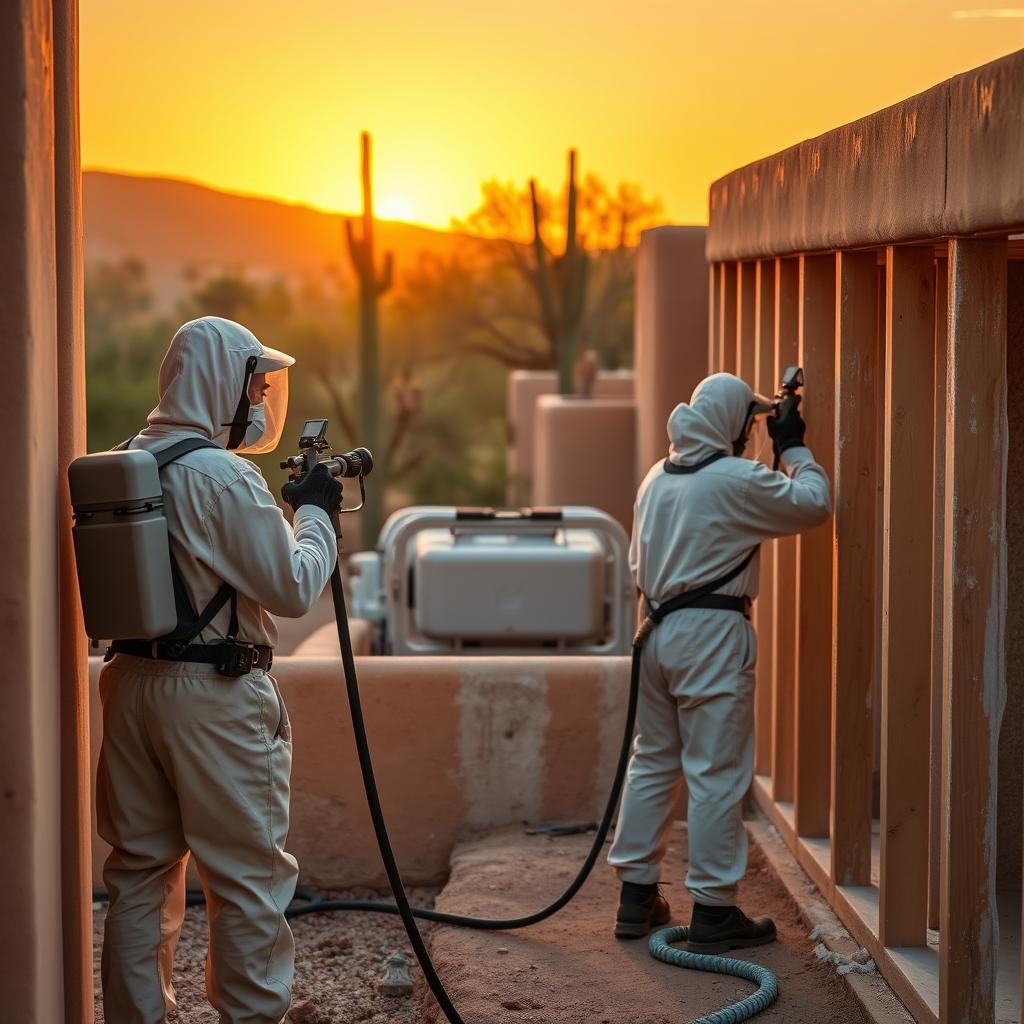
Fiberglass batts are the default insulation most Arizona homes grew up with — cheap, familiar, and everywhere. So why are more Tucson and Southern Arizona homeowners ripping them out and replacing them with spray foam? It comes down to how each material actually behaves in a punishing desert climate.
How fiberglass works — and where it falls short
Fiberglass insulates by trapping air in a web of fine glass fibers. In theory it works. In an Arizona attic, the reality is different:
- It settles and sags over time, leaving gaps and thin spots where heat pours through.
- It's not an air barrier. Hot, dusty desert air filters right through it, carrying heat and grit into your living space.
- It loses effective R-value when air moves through it — and air always moves through it.
- It absorbs moisture, which in monsoon season can mean hidden mold and reduced performance.
- It's a favorite nesting spot for pests, who tunnel through it and leave contamination behind.
Fiberglass is inexpensive to install, and it's better than nothing. But "better than nothing" is a low bar when your AC is running around the clock in 110° heat.
How spray foam is different
Spray polyurethane foam doesn't just sit in a cavity — it expands and seals, creating a continuous air barrier that fills every crack, gap, and irregular space. Two structural differences matter most:
- It stops air leakage, which fiberglass largely ignores. Since air movement is what carries most of the heat and dust into a home, sealing it is the bigger lever.
- Its R-value holds. Foam doesn't settle, sag, or lose performance over decades the way fiberglass does.
You can dig into the two foam types in our open-cell vs closed-cell spray foam guide.
Head-to-head
| | Spray Foam | Fiberglass | |---|-----------|-----------| | Air sealing | Excellent — seals every gap | Minimal — air passes through | | Long-term R-value | Holds for decades | Settles and degrades | | Moisture behavior | Closed-cell is a vapor barrier | Absorbs moisture, can grow mold | | Dust / allergen blocking | Strong | Weak | | Lifespan | Life of the building | 10–20 years before degrading | | Upfront cost | Higher | Lower |
The catch: foam costs more up front
There's no dodging it — spray foam has a higher initial price than fiberglass. But in the Arizona desert, the math flips over time. Foam's energy savings routinely cut cooling bills 30–50%, and because the foam doesn't degrade, those savings keep compounding for decades while fiberglass quietly loses the R-value you paid for.
For a lot of homeowners, the real question isn't "foam or fiberglass" — it's "how long do I plan to own this home, and how much do I spend cooling it?"
When fiberglass is already failing you
If your home has fiberglass that's settled, damp, pest-damaged, or just not keeping up, the right move isn't more fiberglass on top — it's a proper removal and foam retrofit. We handle the safe teardown of old insulation and the correct installation of the new foam so you don't repeat the failure.
Learn how: Foam Removal & Retrofit.
The honest take
Fiberglass isn't evil — it's just a budget material with real limits, and the desert exposes those limits faster than a mild climate does. Spray foam costs more because it does more: it seals, it insulates, it lasts, and it pays you back in lower bills.
Not sure which makes sense for your home? Get a free estimate and we'll inspect what's there and tell you straight whether to retrofit, replace, or leave it alone.
Ready to put this to work in your home?
Get a free, no-obligation estimate — usually scheduled the same week.